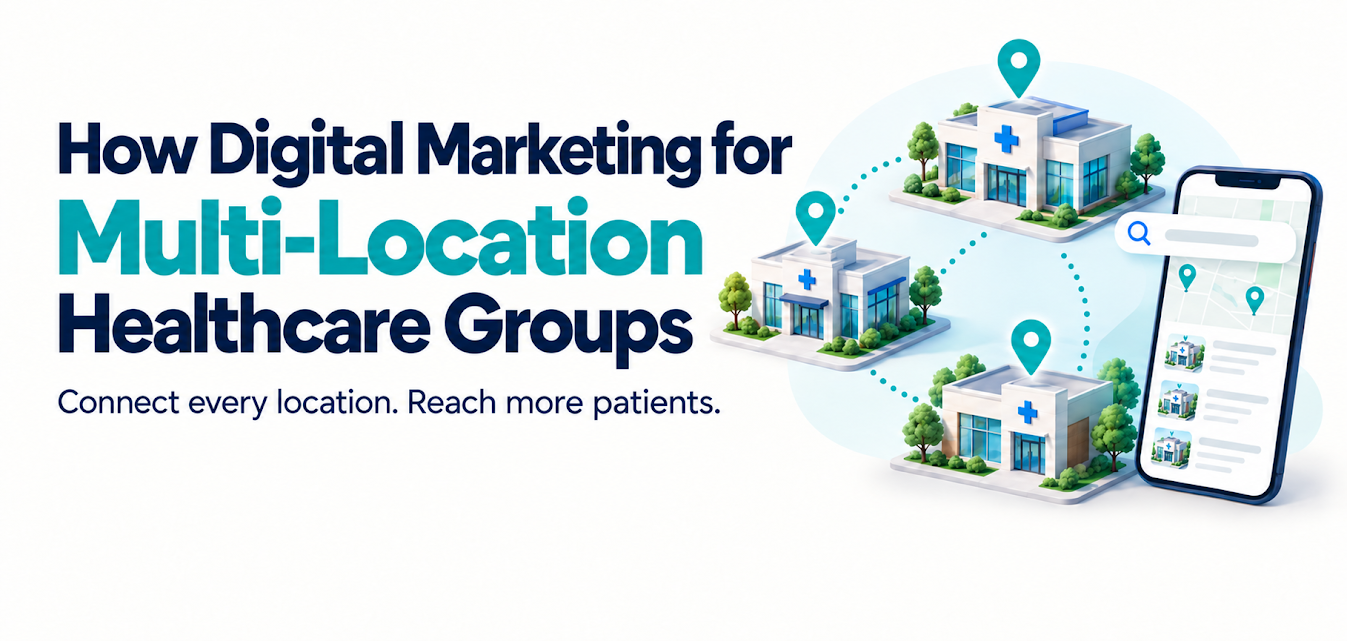
Once a hospital group spreads across several cities, its online presence starts slipping. One branch gets a steady flow of appointment calls from Google, while another barely shows up in local search. Usually the cause isn’t the budget. It’s how marketing is handled from one location to the next. A workable digital marketing strategy for healthcare organizations helps hospital groups show up locally, promote the services they actually offer, and see which efforts bring in real enquiries.
Why Every Location Needs Its Own Digital Marketing Plan
A hospital in Delhi and a diagnostic centre in Noida may share a name, but their patients are searching for different things. The hospital might want more cardiology consultations. The centre might care more about blood tests and health check-up packages.
Run the same campaign for both and you’ll get visitors who aren’t looking for what that branch offers, plus ad spend that goes nowhere. A better split is to keep the brand guidelines common and let each location focus on its own services, patients and competitors.
In practice, the central team can look after the main website and the overall ad budget. Each branch then sends in current details on its doctors, consultation hours and treatments.
Improving Hospital Group SEO Across Locations
Most patients search by pairing a service with a place, such as “ENT specialist in Dwarka” or “thyroid test near me”. Good hospital group SEO helps the right facility appear for those searches and sends visitors to the right page.
Keep Local Listings Accurate
A wrong phone number or outdated opening hours can send a patient to the wrong place, or leave them standing outside a closed door. Every eligible hospital and diagnostic centre should have its own Google Business Profile, and someone should check these regularly. Look at:
- Address, phone number and opening hours
- Departments and diagnostic services listed
- Website links and appointment details
- Patient reviews, and whether they’ve been answered
- Duplicate listings and old business information
If a hospital opens a new specialist department, update the website pages and the listing at the same time. Patients want to confirm a service exists before they travel for it.
Give Each Facility a Page Worth Reading
A common mistake in multi-location healthcare SEO is copying one page several times and swapping only the city name. Patients get nothing useful from those pages, and neither do search engines.
Each facility page should say what’s specific to that place: the address and directions, the doctors, the departments, consultation timings and how to book. A Delhi hospital page might cover its cardiology department and specialist consultations. A Noida diagnostic centre page should instead cover the tests on offer, home sample collection and the booking process.
If you’re working with a digital marketing company in Delhi or an SEO agency in Delhi, check that the local pages are accurate and written around what patients actually need.
Run Campaigns Around Local Needs
Ads should match what each facility really offers. Promoting a treatment in an area where it isn’t available wastes money and frustrates the people who click.
Healthcare campaign management works best when campaigns are organised by location, specialty and goal. Say a group wants more cardiology consultations in Delhi and more diagnostic bookings in Noida. The team can run separate search campaigns for each, send traffic to matching landing pages, and track the enquiries each one generates.
Before launching, it helps to:
- Choose keywords tied to services the facility actually provides
- Set geographic targeting around the facility’s real patient catchment area
- Build a landing page for each service
- Track calls, enquiry forms and appointment requests
- Judge the quality of enquiries, not just the number of clicks
- Check healthcare advertising policies and platform restrictions
Paid campaigns can run alongside local SEO services in Delhi. Ads bring visibility quickly, while SEO builds organic traffic over time.
Make the Website Easy to Use
People visit a hospital website with a specific question. Which doctors are available? Where is the department? What does this test involve? How do I book?
If the answers are hard to find, they’ll leave and call someone else. So organise the site around what visitors are trying to do. A good healthcare website usually has:
- Separate pages for hospitals, clinics and diagnostic centres
- Clear information on specialties and services
- Mobile-friendly layouts and readable text
- Simple appointment forms and visible contact details
- Fast-loading pages and easy navigation
- Secure handling of patient information
A web design company in Delhi or a website development company in India can restructure the site as new facilities open or the group expands into new areas.
Write the content to answer common patient questions in plain language. That makes it easier to read, and it helps with search visibility too, including searches made through conversational tools.
Also read: Wondering Why Big Hospitals and Clinics Have Many Patients While Your Clinic Remains Empty?
Keep Social Media and Email Relevant
A group might have one central social media team, but not every post suits every branch. If one facility launches a new diagnostic service, don’t announce it as available across the whole network unless it is.
A shared content calendar helps here. It can cover health awareness days, department updates, community events, and service announcements. Local staff provide the verified details, and the central team keeps the branding consistent.
A social media agency in Delhi can help with content planning and campaigns. An email marketing agency in Delhi can set up newsletters and service updates for people who have agreed to receive them.
Patient information needs careful handling. Messages should respect privacy rules and never reveal sensitive medical details.
Measure What Each Location Delivers
More website traffic doesn’t mean more appointments. Marketing managers need to know which activities bring in relevant enquiries and where things aren’t working.
A shared report should track:
- Local search visibility and website traffic
- Calls and appointment enquiries by facility
- Cost per qualified enquiry from ads
- Appointment form completion rates
- Bookings, where tracking is reliable
- How performance differs between locations
Suppose a branch gets plenty of visits but few appointment requests. The team can check whether the page explains the service clearly, shows the right phone number, and offers an easy way to book.
An SEO expert in Delhi can help dig into problems like this, review local search performance, and suggest fixes based on what each facility needs most.
One Strategy, Many Locations
Marketing across several hospitals takes regular coordination between the central team and the managers at each facility. Accurate listings, useful location pages, relevant ads and reliable reporting keep the strategy tied to what patients actually need.
Review each location on its own. A campaign that works well in one city won’t necessarily work in another. Small fixes to service details, local targeting and the appointment journey can make your marketing more relevant and easier to measure.
AMSDigital helps businesses with SEO, paid advertising, social media marketing and website development.
Grow your healthcare business with an expert digital marketing agency in Delhi.
Email: sales@amsdigital.in | Call: +91 9667540071