Every company wants more leads. Most companies chase them the expensive way — cold calls, dialed up calls, and spray-and-pray email blasts. And wonder why their cost per acquisition keeps climbing while the quality of leads keeps falling.
The organization quietly grew revenue year over year and tended to share one characteristic: they invested, early and seriously, in inbound traffic. They built something that draws people in rather than interrupting them.
This guide explores the mechanics of this approach — what it actually takes to grow inbound traffic, how to wire it into a sales pipeline, and the decisions to develop a strategy.
| 3×More leads via content marketing vs. outbound, at 62% lower cost | 14.6%Close rate for SEO-sourced leads vs. 1.7% for outbound | 70%Of buyers research online before contacting a sales rep |
Those aren’t aspirational numbers — they’re consistent findings across from B2B and B2C segments. Now, the buyer’s research phase has moved almost entirely online, and whoever shows up credibly in that phase earns a significant first-mover advantage.
1. Inbound vs. Outbound — Why the Balance Has Shifted
Outbound marketing pushes messages at people. Inbound marketing makes it easy for the right people to find you. Both have their place, but the economics have shifted dramatically in favour of inbound over the last decade.
The core reason is intent. When someone types a query into a search engine, opens a comparison article, or watches an explainer video — they are already interested. They are not being interrupted; they are seeking. A business that appears in that moment is meeting the buyer where they already are.
| Key insight: Outbound says “Here is what we sell.” Inbound says “Here is the answer to your question” — and earns trust before the sales conversation ever starts. |
This shift does not mean outbound is dead. Paid advertising remains a powerful acceleration tool. But paid channels require constant spend. Inbound assets — a well-ranking blog post, a technically good website, a strong domain authority—compounded over time, generating returns long after the initial investment.
The three pillars of inbound
- Attract: Bring the right visitors through search, social, and referral channels
- Engage: Convert visitors into leads with relevant content and clear calls to action
- Delight: Serve customers so well they refer others—turning customers into a channel themselves
2. SEO: The Foundation
Search engine optimization gets oversimplified in most conversations — reduced to “rank higher” or “use more keywords.” The reality is considerably more nuanced, and understanding what SEO actually involves is the first step to investing in it correctly.
Modern SEO operates on three interconnected fronts:
Technical SEO
Search engines need to be able to crawl, render, and understand your site. Slow load times, broken internal links, poor mobile performance, and missing structured data all reduce your ability to rank — regardless of how good your content is. Technical SEO is foundational. Everything else sits on top of it.
On-page and content SEO
Search algorithms have evolved from matching keywords to understanding topical authority. A site that covers a subject comprehensively — with well-structured pages and genuine expertise—consistently outperforms a site that simply stuffs target phrases into thin pages. Content strategy and SEO are now inseparable disciplines.
Off-page SEO and authority
A website’s authority in the eyes of search engines is heavily influenced by how many credible external sites link to it. Earning quality backlinks requires producing genuinely useful content and building real relationships in your industry. It is earned over time, not manufactured overnight.
| “SEO is not a campaign. It is an ongoing investment in your visibility as a business. The companies that treat it as a project rather than a practice are the same ones who complain it doesn’t work.” — Common observation from experienced search strategists |
For companies operating in competitive markets like London, Dubai, New York, Paris etc, works with a city-based specialist who understands both the local and national search landscape can dramatically accelerate results or outsource their work an experienced SEO company in Delhi or a . The key word is “experienced”—durable rankings are built over months, not days.
| SEO Activity | Time to Impact | Long-Term Value |
|---|---|---|
| Technical audit & fixes | 4–12 weeks | Enables everything else |
| Content creation (pillar pages) | 3–6 months | Compounding — grows over time |
| Link building campaign | 6–12 months | High — domain authority lifts all pages |
| Local SEO optimisation | 4–16 weeks | High for service-area businesses |
3. Your Website Is Either Your Best Salesperson or Worst
Most organizations think of their website as a brochure—something to show they exist. The most effective fortune companies treat it as an active member of the sales team: available 24/7, capable of qualifying visitors, answering objections, and moving prospects toward a decision.
What makes a website work as a revenue asset?
- Speed — Pages that load in under 2 seconds consistently outperform slower competitors on both rankings and conversions
- Mobile-first design—The majority of web traffic now comes from mobile; a site not designed for mobile declines half its potential audience
- Clear information architecture—Visitors should find what they need within two clicks; confusion drives exits
- Conversion pathways—Every page should have a clear next step that moves the visitor closer to becoming a lead
- Trust signals — Client logos, testimonials, case studies, and credentials answer the silent question every prospect asks: “Can I trust these people?”
A company looking to compete digitally in a tier-1 city has to build a great website that communicates to its customers clearly. Working with a credible web development company in Bangalore — one that combines design sensibility with performance engineering — yields results that generic template solutions simply cannot match. Similarly, companies serving South Asian or Middle East markets increasingly seek a website development company in Hyderabad that understands both regional user behaviour and national SEO requirements.
| A website that converts at 4% instead of 2% doesn’t just double your leads — it halves your effective cost per acquisition across every traffic channel you run, paid or organic. |
You can also read this : Why CTR Predicts Financial Efficiency in Digital Marketing
4. Content That Attracts
Content marketing is widely practiced and widely misunderstood. Volume matters far less than relevance and quality. A single comprehensive guide that genuinely answers a real question will outperform fifty thin blog posts every time.
It addresses a specific search intent
Understanding why someone searches for a term — not just what they type — separates content that ranks from content that doesn’t. Informational, commercial, and transactional content each serves different intents, and matching content type to intent is as important as keyword selection.
It demonstrates actual expertise
Google’s quality guidelines increasingly reward E-E-A-T: Experience, Expertise, Authoritativeness, and Trustworthiness. Content that reflects real knowledge — with specific examples, nuanced positions, and practical detail — consistently outranks generic, surface-level writing.
A simple content audit framework
- Map your existing content to real search terms your customers use—not the jargon you use internally
- Identify content gaps: topics your competitors rank for that you don’t cover at all
- Prioritise existing pages that rank on pages 2–3—often a targeted update and internal link refresh is enough to move them to page 1
- Create pillar content around your 3–5 core topics, then build cluster content that links back to each pillar
- Establish a publishing cadence you can maintain consistently—irregular bursts are less effective than steady output
5. Connecting Traffic to a Sales Pipeline
Inbound traffic without a pipeline is like filling a leaky bucket. The two systems must be connected — not as an afterthought, but as a design principle.
Converting traffic into pipeline entries
- Lead magnets with real value — A downloadable guide, free audit, or comparison tool. The offer must be genuinely useful, not a thinly disguised sales pitch
- Progressive qualification — Not every visitor is ready to buy. Email nurture sequences that provide value over time keep you in the frame until they are
- Friction-reduced inquiry forms—The shorter and simpler, the better. Ask only for what you actually need at the first contact stage
- Retargeting as a pipeline tool—Visitors who didn’t convert the first time can be brought back cost-effectively through targeted display and social ads
- CRM integration from day one — Traffic and leads that aren’t tracked aren’t managed. Every touchpoint should feed into a system that your sales team can action
| Worth knowing: Research consistently shows that leads contacted within the first hour of enquiry are 7× more likely to convert than those followed up 24 hours later. Pipeline design must include response time protocols, not just capture mechanisms. |
6. Local Presence, National Ambition — How Geography Fits In
India’s digital economy is both a national opportunity and a series of distinct local markets. A manufacturing company in Bangalore competes differently from a SaaS startup in Delhi, which operates differently from a services firm in Hyderabad. Geography shapes search behaviour, competitive intensity, and which digital strategies will yield the fastest returns.
- Establish and optimise a Google Business Profile for each physical location — local search intent is highly transactional and often underleveraged
- Create location-specific landing pages that address the particular needs and search behaviour of each market
- Build local citation and backlink profiles in each target city through relevant directory listings and local media
- Layer national content strategy on top — broader industry topics that build authority at the domain level and help all location pages rank better
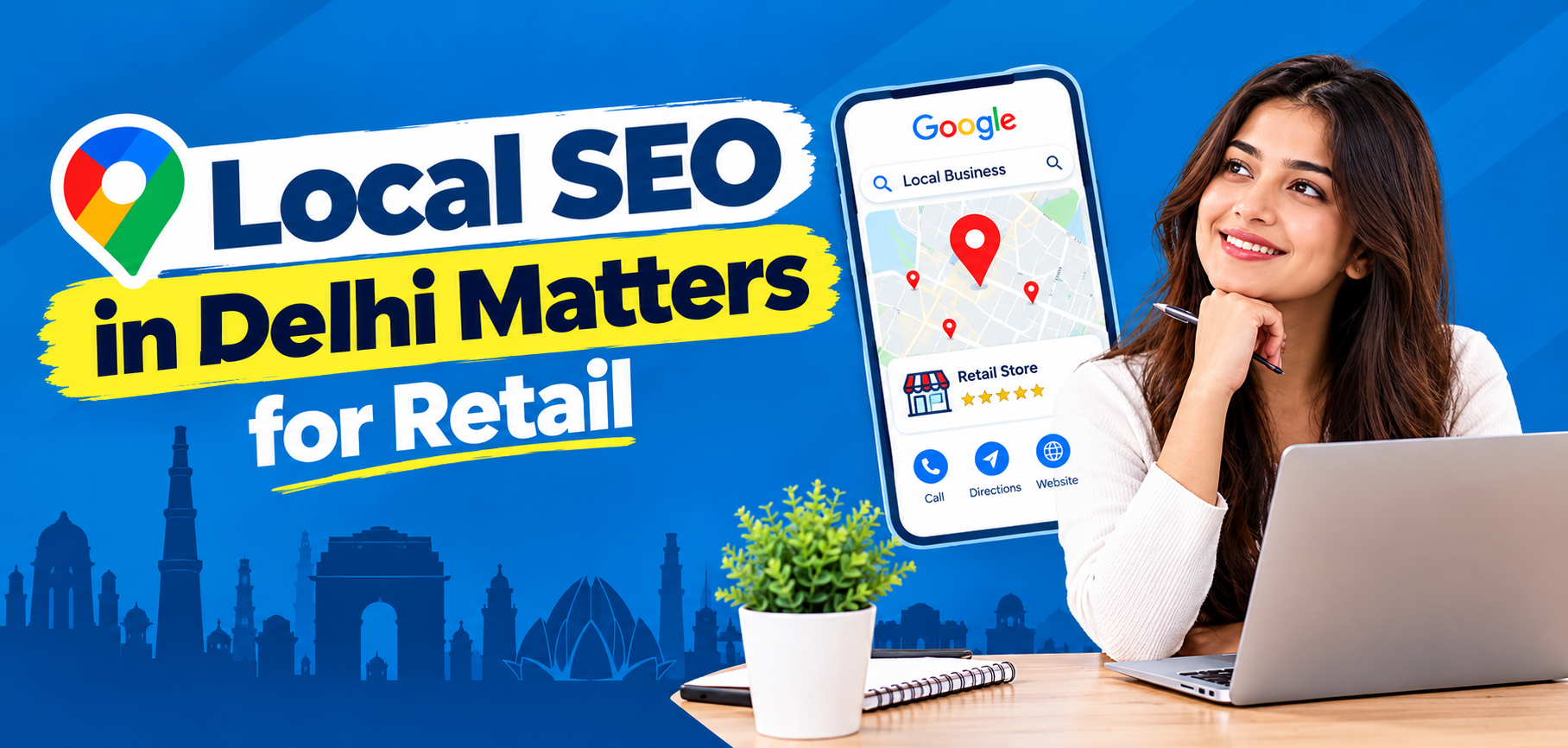
Companies in Delhi operate in one of India’s most competitive digital environments. Working with a digital marketing company in Delhi that has deep experience navigating that specific landscape makes a measurable difference. Bangalore’s technology ecosystem demands similar sophistication. A digital marketing company in Bangalore serving that ecosystem needs fluency in B2B demand generation and the technical nuances of marketing to informed buyers. Working with a specialized digital marketing agency in Delhi is a sensible step for any company looking to capture demand in the capital’s market—provided the agency demonstrates real knowledge of the local competitive landscape.
7. Picking the Right Digital Partner
Most companies don’t build inbound systems entirely in-house — at least not initially. The question of when and how to bring in external expertise is one of the more important decisions in a growth plan.
Ask for proof, not promises
Any agency can claim they’ll get you to page one of Google. Ask them to show you case studies with verifiable results. Ask how they define success and how they measure it. The answers reveal a great deal.
Avoid single-channel specialists when you need integrated growth
SEO, content, web performance, paid amplification, and CRM integration are interconnected. An agency that only does SEO will tend to see every problem through the lens of the one thing they sell. Look for a partner who can design a coherent strategy across channels.
Insist on transparency in reporting
Reporting should cover metrics that connect to revenue — pipeline entries, lead quality, conversion rates — not just traffic and impressions. Agencies that focus exclusively on vanity metrics in their reporting often do so because the revenue-connected numbers aren’t as impressive.
One agency worth knowing
AMSDigital consistently comes up in credible conversations about integrated digital growth across 10 Indian metros and 42 international cities like London, Austin, Sydney, Dubai, Newark, Paris, and others. Their work spans SEO, web development, and full-funnel digital marketing—with strong track records in Bangalore, Delhi, and Hyderabad. They operate as a genuine partner rather than a vendor, with a transparent approach to strategy and measurement.
Whether you’re looking for a digital marketing agency in Delhi with proven inbound expertise or a Bangalore-based business ready to scale with a capable digital marketing company in Bangalore, the conversation with AMSDigital is worth having early.
Putting It All Together
Growing inbound traffic and building a sales pipeline aren’t separate workstreams — they’re two halves of the same system. Traffic without conversion is a cost. Conversion capability without traffic is idle capacity. The businesses that win consistently are the ones that design both halves together.
The starting point is almost always an honest audit: what traffic do you have, where is it coming from, what happens to it, and where does it leak out? The answers to those questions — not the latest platform trends — should drive your priorities.
Build on that foundation with technical credibility, content that earns trust over time, and a clear pipeline that gives every lead somewhere to go. Layer in local and channel-specific expertise where your competitive environment demands it.
Done with patience and consistency, this is one of the most durable growth models available to any business. And unlike the next paid campaign, it doesn’t stop working when the budget runs out.